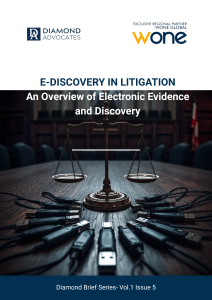
As digital communications continue to replace paper records, the legal profession can no longer afford to treat electronic discovery as an afterthought.
In our latest Diamond Brief, Vera Nakatumba explores E-Discovery in Litigation, a practical overview of how electronically stored information (ESI) is identified, preserved, collected, and produced in legal proceedings, and what this means for litigants and legal practitioners in Uganda.
Key takeaways from the brief:
📌 What qualifies as ESI, from emails and spreadsheets to deleted files and cloud storage
📌 The four conditions digital evidence must meet to be admissible in court
📌 Uganda’s legal framework: the Electronic Transactions Act, the Data Protection and Privacy Act, and the Evidence Act
📌 The 7-stage Electronic Discovery Reference Model (EDRM)
📌 How courts balance data protection principles with the evidentiary demands of litigation
E-Discovery is no longer a concern exclusive to large, multinational disputes. As Ugandan courts and businesses become increasingly digital, understanding the rules around electronic evidence is essential for anyone involved in litigation.
Read the full brief below.